
MS @ Duke CS & Econ
BS @ SUFE Econ & Math
Zini Yang
Hi! I am a master's student in Computer Science and Economics at Duke University, working with Dr. Emily Wenger at the Argus Lab. My research bridges computational social science and AI, focusing on game theory, behavioral economics, and network science to build socially aware and trustworthy AI.
I completed my undergraduate studies in Mathematical Economics at Shanghai University of Finance and Economics (SUFE) under Prof. Simin He, where I worked on behavioral economics.
Research Interests
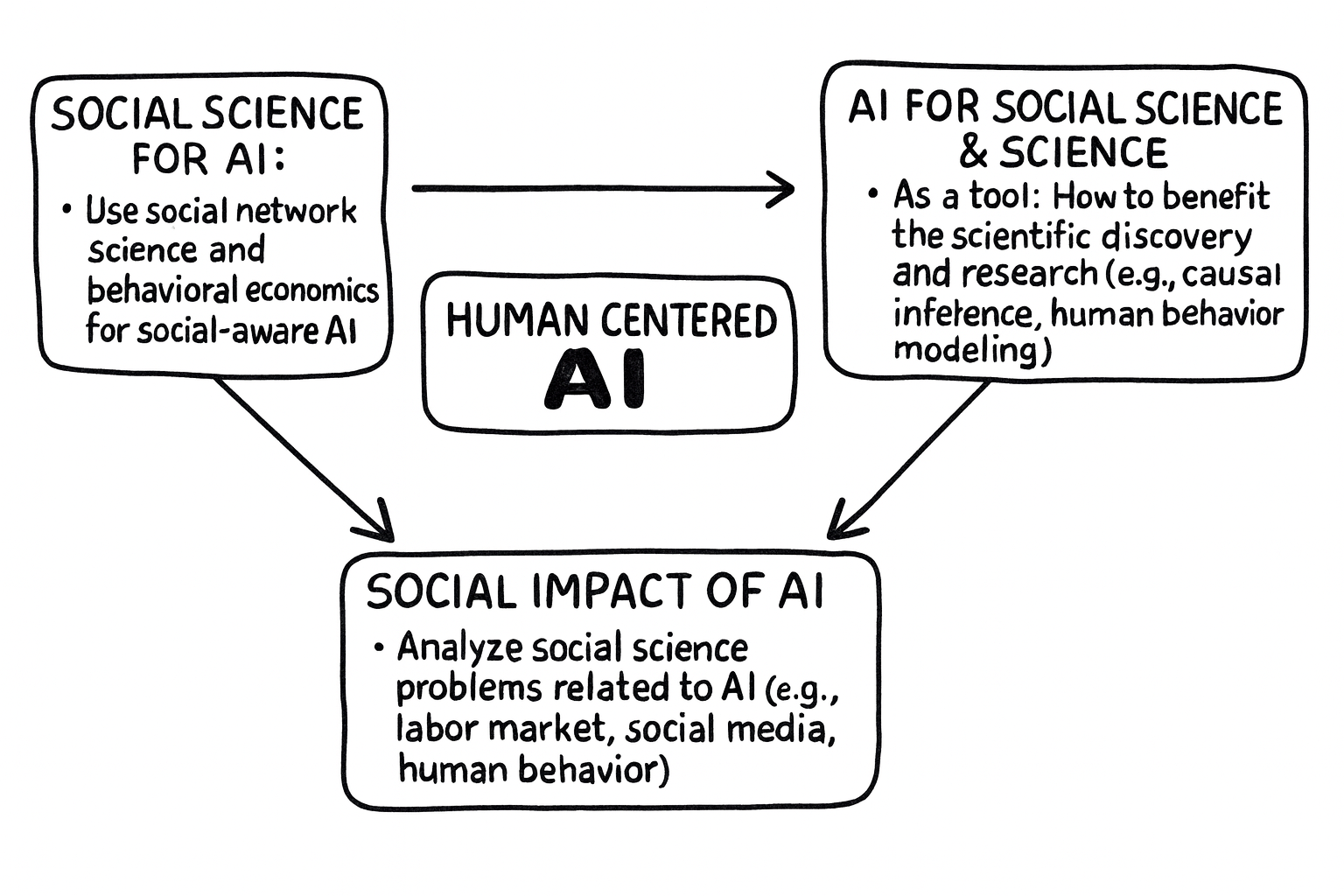
Social Science for Trustworthy AI: Utilize insights from game theory, behavioral economics, and network science to bridge the gaps between LLMs and human intelligence and build more socially aware, aligned models.
AI for Science & Social Science: Explore how AI can enhance scientific discovery and social science, improving modeling and simulations of human behavior.
Publications
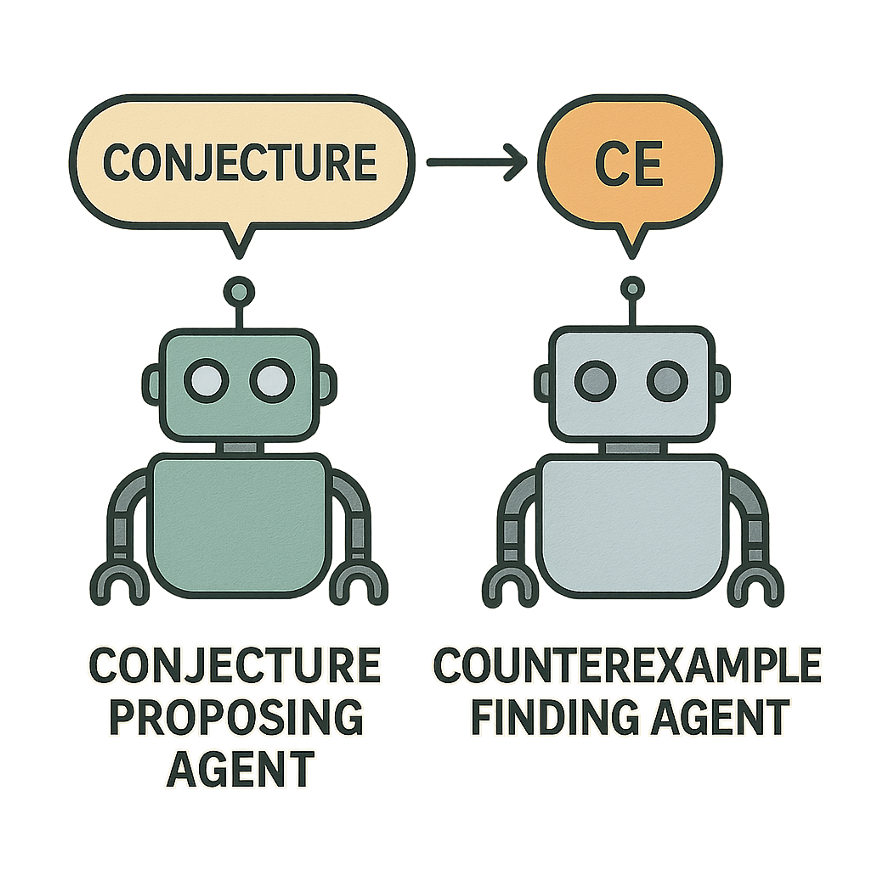
We introduce the Inequality Ranking and Inference System (IRIS), a system that quantifies and ranks mathematical conjectures through sharpness, diversity, difficulty, and novelty metrics. By re-engineering the GraffitiAI pipeline, IRIS scales conjecture evaluation and includes an automated counterexample discovery system using GNN embeddings and PPO-based reinforcement learning, refuting 95% of tested conjectures.
Research Projects
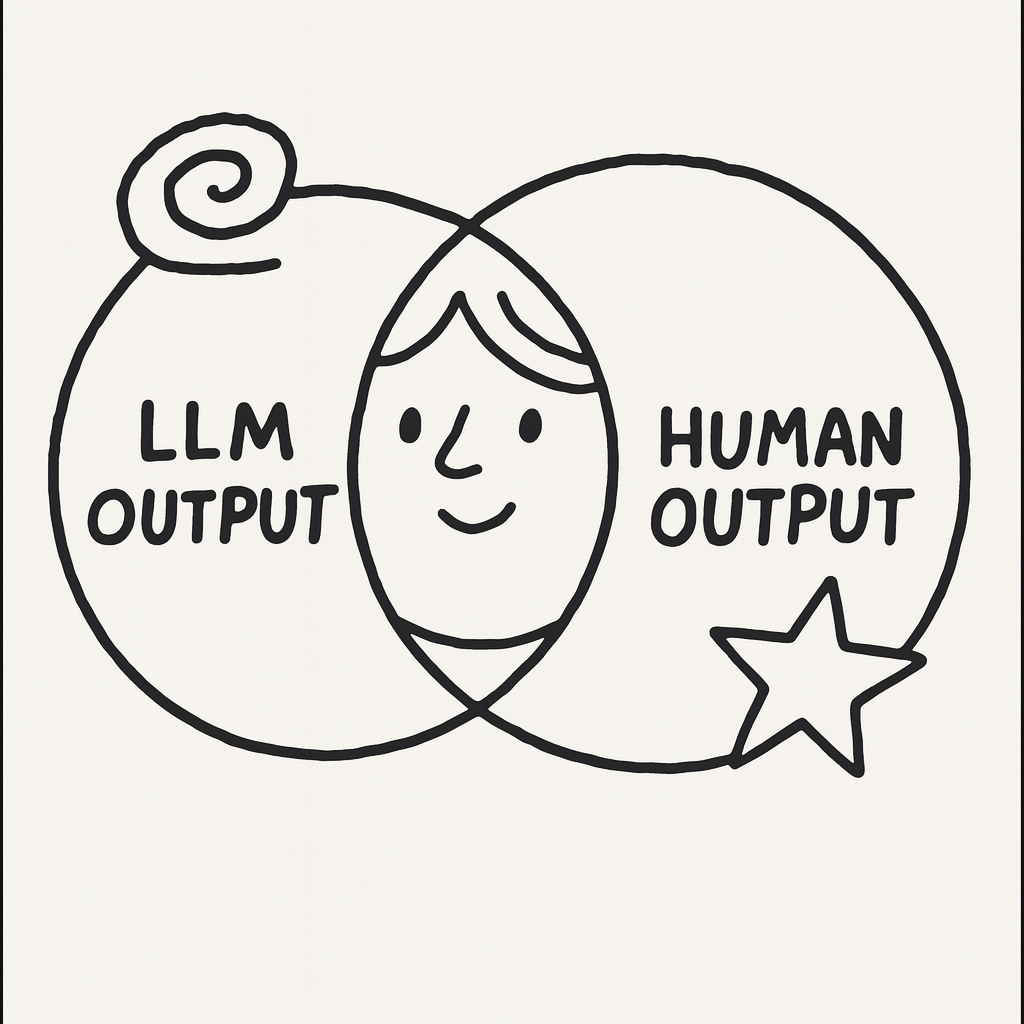
In this project, we observed that most existing evaluation methods rely solely on explicitly defined criteria, which limits their ability to meaningfully assess LLM creativity. To address this limitation, we proposed a method that incorporates human responses to better evaluate the LLM creativity. Our approach consists of two steps: 1) we create a boundary in the embedding space by identifying the smallest convex hull that contains human responses above a density threshold; 2) we introduce the LLM coverage rate, which measures the proportion of LLM outputs that fall within this human-response-grounded boundary. Across a range of tasks, including divergent thinking, code generation, and creative writing, our method exhibited strong generalizability: the LLM coverage rate consistently decreased as tasks required more detailed and thoughtful responses. This demonstrates that our human-response-grounded framework provides a better way to evaluate LLM creativity.
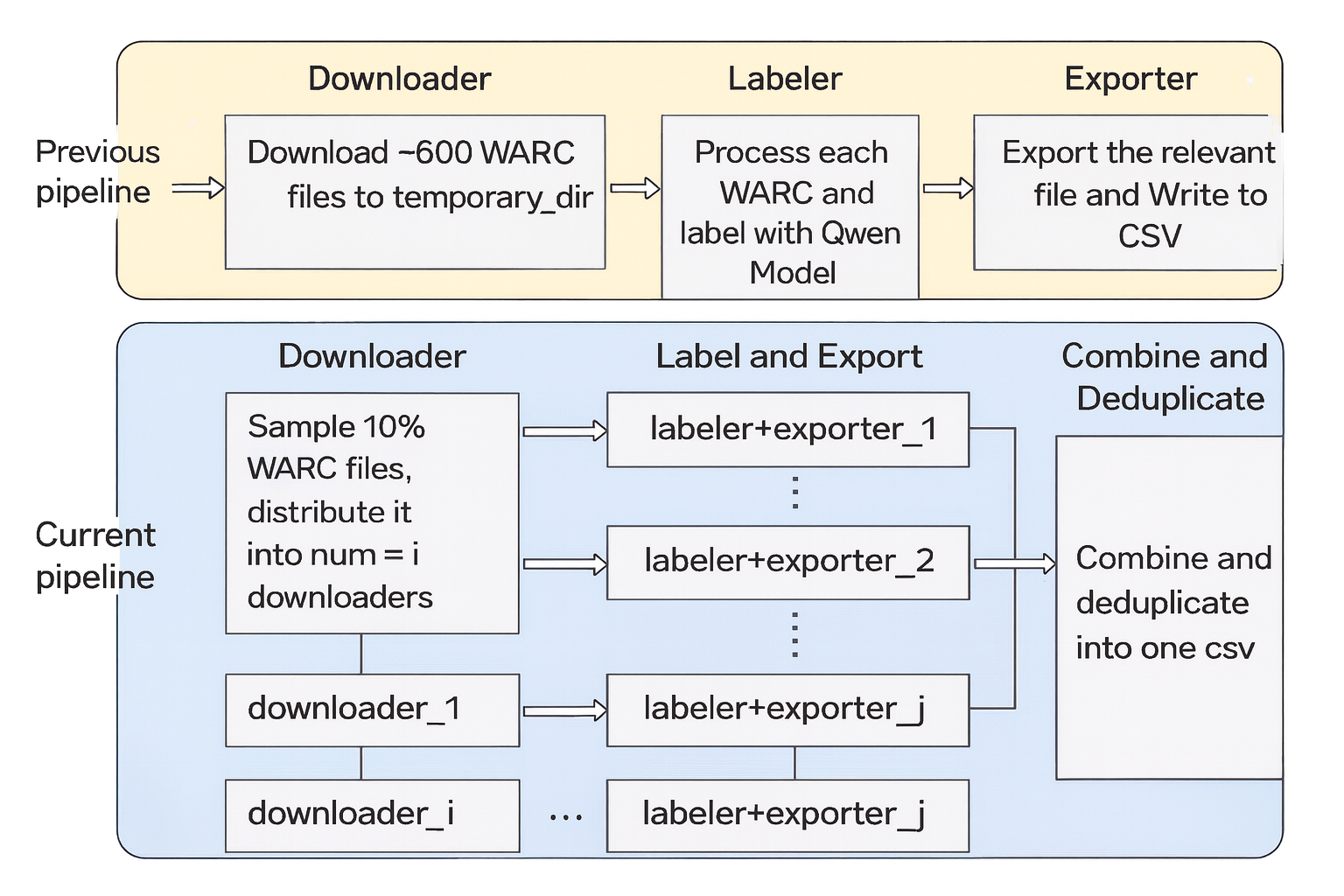
The project focuses on early detection of vaccine-related risks. Because news coverage tends to spike only after crises escalate, early warning signals buried in open-source data remain underutilized. To address this challenge, I developed an end-to-end pipeline that processes terabytes of Common Crawl data. To manage the computational scale, I implemented a FastText-based coarse filter, achieving ~60% precision while running over 1,000× faster than LLM-based classification. I then applied a locally hosted Qwen model for fine-grained labeling using carefully validated prompts and annotations. To enhance interpretability, I integrated UMAP-based clustering and LLM-generated summaries to reveal emerging discourse patterns.

This research addresses the asymmetry where data defenders possess less advanced technology than professional scrapers. We formulate the protection problem as a dynamic game where protectors choose defense levels periodically and attackers optimize attack timing. A Markov model over breach history analyzes evolving deterrence dynamics and derives optimal strategies that maximize long-term defense efficiency.
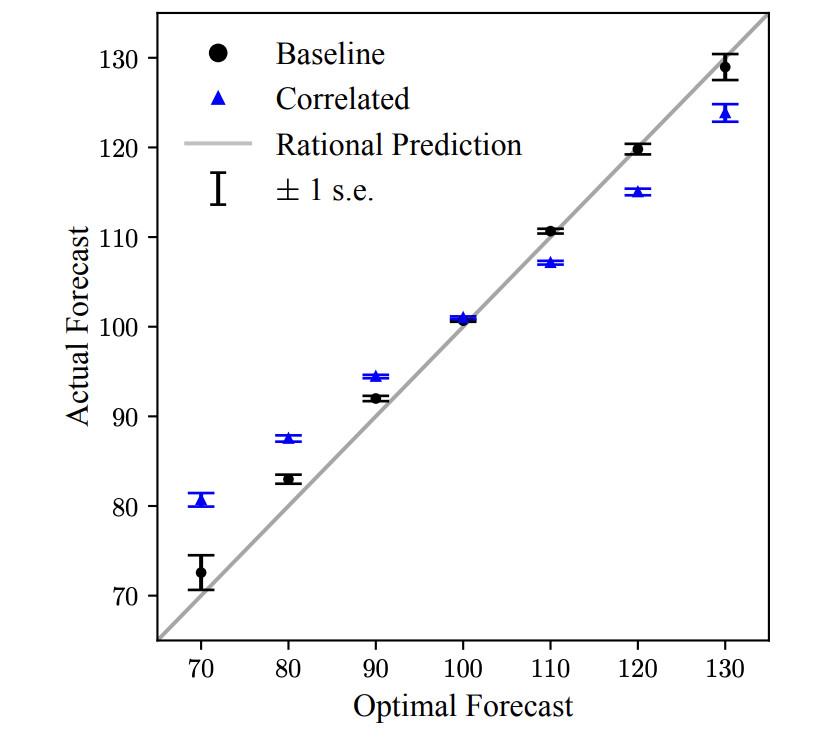
Conducted an empirical analysis of how individuals form expectations about a certain variable using information from multiple, possibly correlated sources. Examined deviations from rational benchmarks when signals overlap.
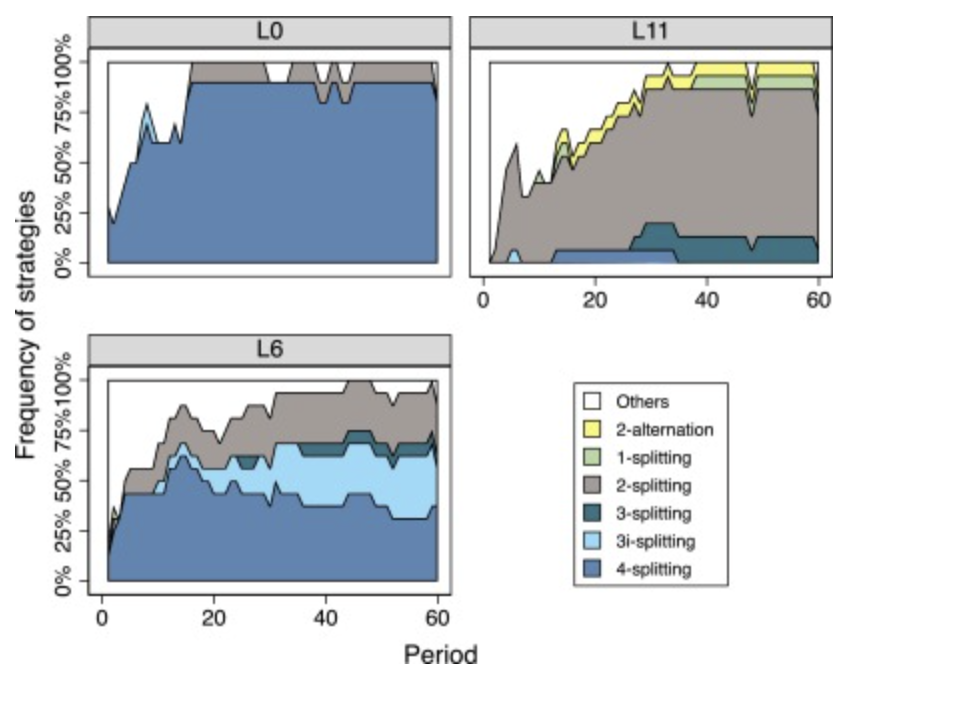
Analyzed how people form and retain costly, mutually-agreed social connections to cooperate on providing social goods. Studied stability of networks and how incentive design influences cooperative ties.